Jul 05
Jul 04
Mykonos is part of a cluster of islands including Delos, Rhenia and some rocky islets. Mykonos, already inhabited since the 5th millennium B.C. (prehistoric settlement of Ftelia), has shared with them a long and copious history with them. Its intense tourist and cosmopolitan activity, which has continiously kept Mykonos in the foreground, inevitably reminds us of the cosmopolitan ancient Delos during the period of its commercial peak (Hellenistic-roman period).

Mykonos is located to the area of the central Aegean Sea and belongs to the prefecture of Cyclades. Its total surface is 26.370 acres, while the length of its shores reaches 81 kilometers.
It consists of the municipality of Mykonos. The resident population of the island adds up in 9.320 people according to the census of 2001 (E.S.Y.E.). The highest point of Myconos reaches approximately the 14 kilometers and its widest about 10.
See or print maps of Mykonos HERE!!

Jul 04
25 years ago: Political crisis deepens in Poland
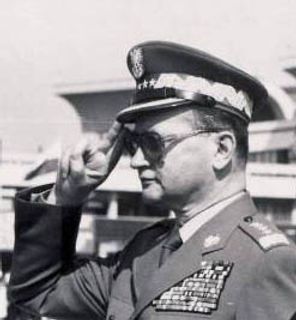
On June 30, 1989, Gen. Wojciech Jaruzelski announced he would step down from the Polish presidency in the vote to be held by the newly elected National Assembly. The June 4 parliamentary election had been a rout for Communist Party candidates, with Solidarity winning 99 of 100 seats in the Senate, and all the contested seats in the lower house. Communist Party candidates won only one of the 35 seats reserved for country-wide voting. In a runoff June 18 to fill those seats still vacant, voter turnout plunged to only 25 percent, and those voting still refused to give any support to the Stalinists.
50 years ago: US Civil Rights Act signed into law
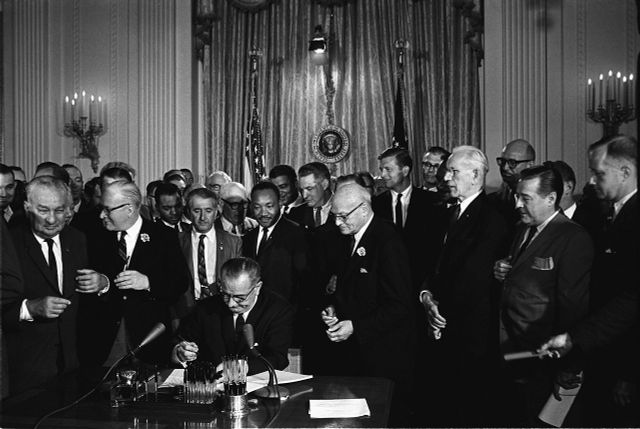
On July 2, 1964, President Lyndon Johnson signed into law the Civil Rights Act, which banned racial segregation in most public facilities. The votes in the House and the Senate played out largely along regional lines, with the bitter opposition of southern Democrats overcome by a combination of northern Democrats and Republicans.
Segregation had been a pillar of capitalist rule in the US for decades, and it was only relinquished in the face of a mass working class movement in the South and in the northern urban centers. Demonstrations continued this week in 1964 in the face of a racist terror across the US South. With the support of the Democratic Party-controlled Southern state governments, violence by the Ku Klux Klan and right-wing vigilantes became epidemic. The racist terror was directed especially at civil rights demonstrators seeking to test out provisions of the new legislation.
100 years ago: Germany backs Austro-Hungarian preparations for war against Serbia
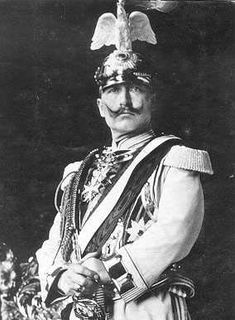
On July 5, 1914 Kaiser Wilhelm II of Germany pledged his country’s unconditional support for any action Austria-Hungary would take against Serbia. Existing tensions in the Balkans had dramatically escalated the previous week with the assassination of Austrian Archduke Franz Ferdinand by a Serbian nationalist in Sarajevo.
Jul 04
Do you know how to use adjectives in English? Take my adjectives grammar test and find out!

Jul 02
Can you talk about clothes that we wear when it's warm? Play this game to practise putting the words in the correct order.

Jun 27

Jun 26

Tip 1
This part of the exam is mainly there to relax the students and start them talking about an easy and pleasant topic – themselves. It is important for the final mark but the real challenge is to be relaxed and sociable. Also, there are not separate marks for the separate sections, so if they start slowly they can make up for it later on.
Tip 2
Examiners usually ask questions to one candidate for one minute, and then switch to the other(s). The non-talking candidate should listen attentively. If they can prove they have been doing so by referring to their partner’s answers when speaking, all the better.
Tip 3
The topics that will usually be covered are family, work and education, home town, leisure and future plans.
Tip 4
You can practise the various topics by brainstorming language for that topic area onto a spider diagram on the board and then getting students to ask each other questions for a few minutes using the vocabulary. Alternatively, they can prepare mini-presentations on, for example, their hobbies.
Tip 5
There will also often be a mix of past, present and future forms used. Speaking practice on all these will obviously be useful.
Tip 6
Any 'getting to know you' activities are useful for this part of the exam, which makes for a good, fun first lesson. If you can slip in some diagnostic work on their language, even better (see Lesson Plan for an example of this).
Tip 7
The examiner generally starts each topic with a simple question (even Yes/ No) and then moves onto more difficult ones. Generally, if the students relax and react naturally, they should have no problems – so there's no need to respond to ‘Do you have a big family?’ with a five minute speech!


Recent Comments